


Chestnut, Hybrid (Bareroot)
Hybrid chestnut seedlings are valued for their blight resistance, productivity, and high-quality nuts, and are great for orchards and wildlife. This bareroot stock is available for late fall and early spring dormant planting to support successful establishment.
- Regular price
-
$11.00 - Regular price
-
- Sale price
-
$11.00
Couldn't load pickup availability
How do i get my plants?
Returns policy
We hope you to love your plants, but if your order arrives damaged, incorrect, or in poor condition please contact us within 24 hours with pictures or a description of the problem.
Learn more about returns and refunds.

Product Details
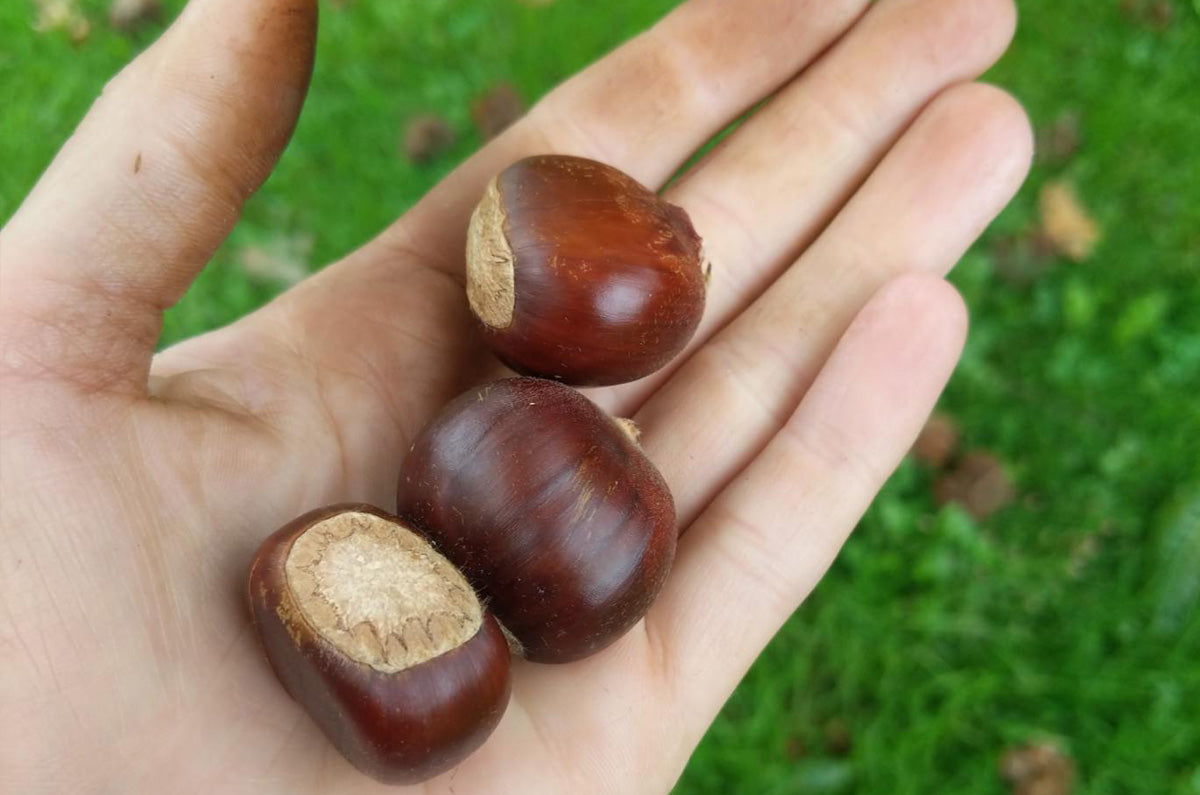
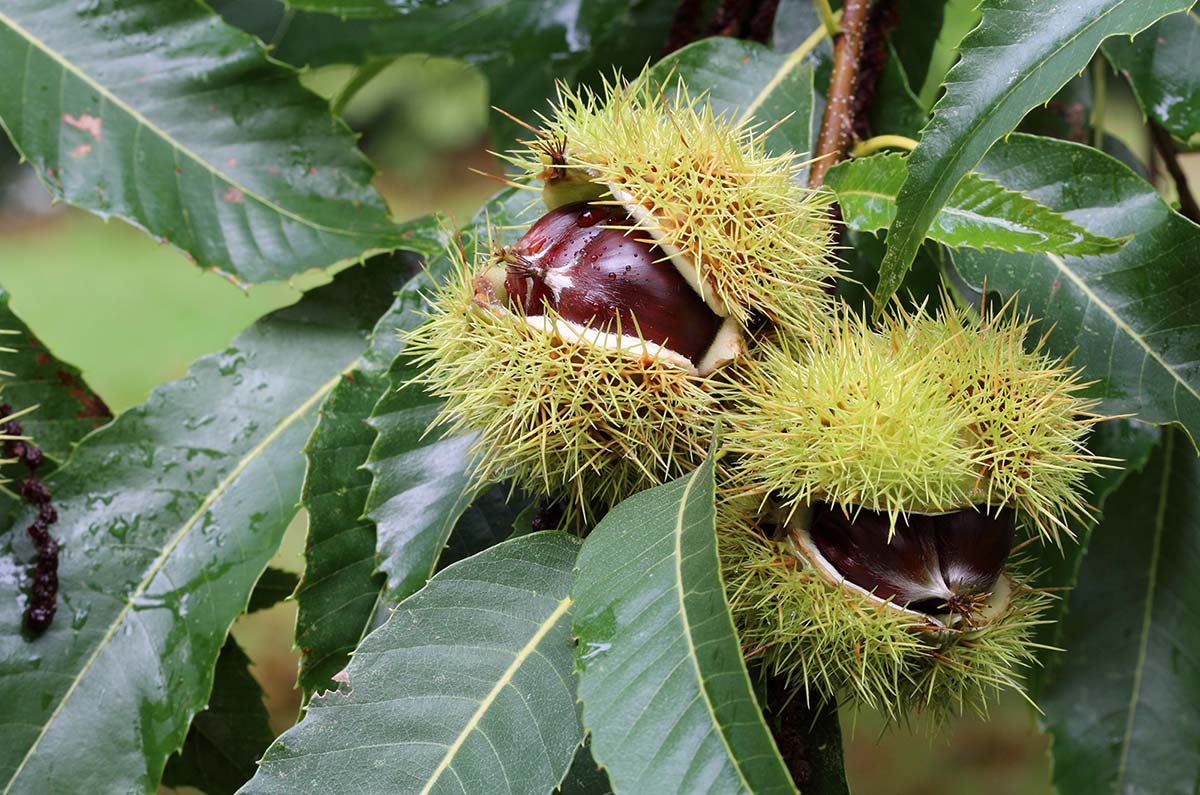
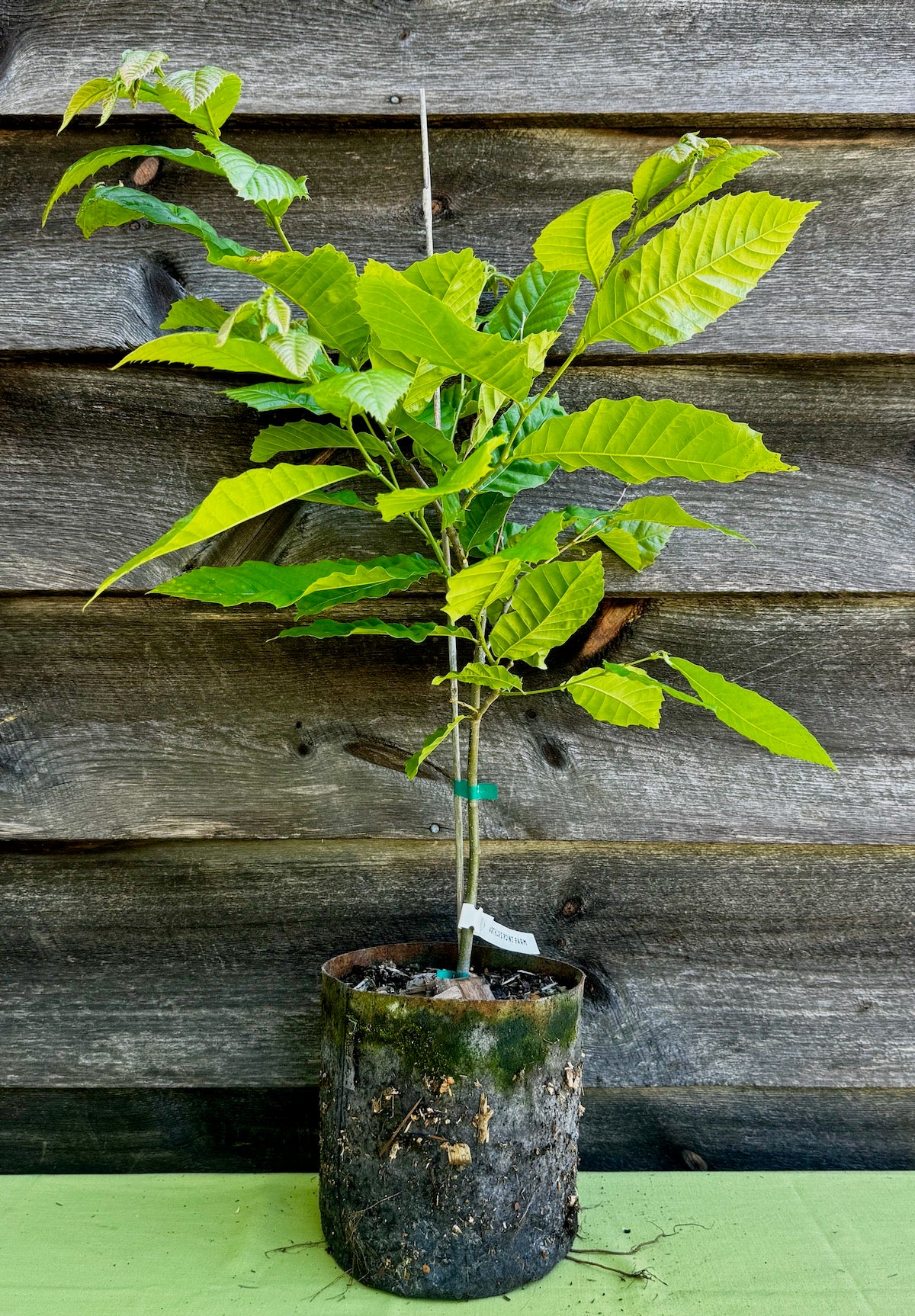
These hybrid chestnut seedlings are selected for high productivity, blight resistance, and exceptional nut quality, making them a cornerstone for sustainable food systems. Offered as bareroot stock for late fall and early spring dormant planting, they provide a cost-effective solution for establishing large-scale production orchards or wildlife plantings. When planted correctly in a well-prepared site, these trees establish robust root systems before top growth begins.
Castanea spp. seedlings in this collection are primarily hybrids of Chinese (Castanea mollissima), Japanese (C. crenata), and American (C. dentata) species. We source seed from respected partners including Rt. 9 Cooperative, Red Fern Farm, and The Horticulture and Agroforestry Research Center (HARC). As detailed in the notes below, some seedlings are derived from known cultivars of select grafted chestnuts, while others come from specific orchard mixes selected for superior traits.
Ideally suited for production orchards, wildlife habitats, or as specimen trees in the landscape, these chestnuts offer both beauty and edible value. They require full sun and thrive in slightly acidic soil; however, they should not be planted in wet shade or high water table environments where drainage is poor. It is recommended to plant at least two trees to ensure pollination, which can be from the same parent cultivar. At maturity, these trees can reach 50 feet in height with a spread of 30 feet.
Choosing bareroot stock allows growers to handle and plant young trees efficiently during their dormant phase. With proper site selection and care, these seedlings are capable of developing into long-lived, productive canopy trees.
Cultivar Notes
- AU Super Seedling (Red Fern Farm): A Chinese chestnut (C. mollissima) selected by Auburn University with relatively large, late-ripening nuts.
- Gideon Seedling: From a 1972 planting of C. mollissima seedlings in Ohio. Gideon is known for a consistent yield of medium to large, easy-to-peel uniform nuts, as well as the superiority of its offspring. It is noted for its cold-hardiness.
- Hudson Valley Orchard Mix (Samascott Orchards): Seeds from a twenty-year old orchard of hybrid and grafted trees in Kinderhook, NY. Seedling trees were originally sourced from Rt 9.
- Iowa Golden Seedling (Red Fern Farm): Seedling of Gideon. In 2020, most trees in the Red Fern planting had no crop due to a late frost, but Iowa Golden had a normal crop of nuts.
- Kaqing Seedling (Red Fern Farm): A 30+ year-old Chinese tree that reliably bears large nuts; named by Tom Wahl after the sound of an imaginary cash register collecting payment for the nuts.
- Mossbarger Seedling (Red Fern Farm): A cold-hardy, early-ripening Chinese (C. mollissima) cultivar from Kentucky that is a heavy bearer of high quality, flavorful, large nuts with good flavor.
- Peach Seedling (Red Fern Farm): From the same planting as Gideon. Known for productivity (though sometimes delayed maturation) with medium to large nuts and consistent flavor, and named for a distinct “peach fuzz” on the shell.
- Resilient Seedling (Red Fern Farm): In 2021, a year plagued by weather extremes at Red Fern Farm, Resilient was the only tree of 1,000 bearing trees that stayed healthy and put on a full crop of nuts.
- Scott Seedling (Red Fern Farm): A pure Chinese (C. mollissima) cultivar. A reliably high producer with large dark mahogany nuts.
- Stehli Mix (Rt. 9): Grown and selected by Bob Stehli in Ohio over the past 30 years, seedlings from the Stehli mix include seed from grafted cultivars of Chinese chestnuts.
Plant Values & Uses
Product Specifications
Wholesale & Project Buyers
We offer wholesale and bulk pricing for larger orders. We value long-term partnerships and are glad to support businesses, institutions, and nonprofit organizations working toward regenerative and ecological goals.
We regularly work with Farmers, Landscapers, Municipalities, Nonprofit Organizations, Plant Nurseries, Retailers, and Schools and Universities.
Wholesale customers can place bulk orders directly through our Plant Order Form, which allows quick shopping and select multiple products across our catalogue in one place.
For larger projects or specialized needs, we encourage you to contact us directly to discuss availability, pricing, and scheduling. We are happy to collaborate and help you source the right plants for your work.
-
Rooted in Ecological Restoration
We plant trees to rebuild soil, restore habitat, and reverse long-term land depletion. Every plant we grow serves a larger ecological purpose.
-
Regionally Appropriate Species
We prioritize species that are well suited to Northeast soils, temperatures, and seasonal rhythms, selecting plants with proven ecological and agricultural performance in this region.
-
Built for Long-Term Resilience
We grow for durability, biodiversity, and future generations. Strong root systems. Honest practices. Plants that establish and endure.